

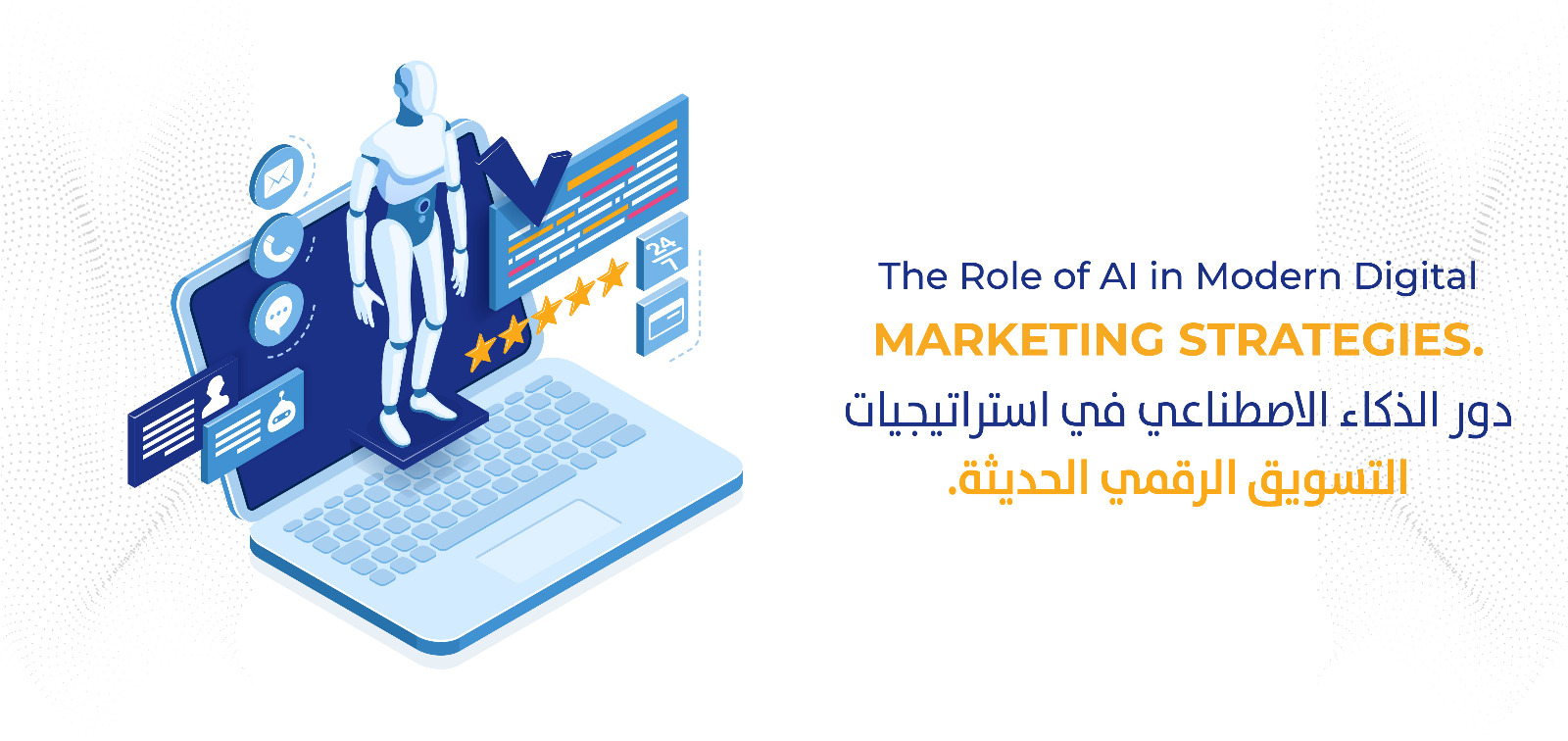
Digital marketing has always been a race between attention and relevance. The channels change, the algorithms evolve, and audiences become more selective. What has changed most in the last few years is not only where people spend time, but how quickly expectations rise. Customers now assume brands will understand what they want, respond instantly, and deliver value without friction. This is exactly why the role of AI in modern digital marketing strategies is growing from “nice to have” into a competitive requirement.
AI does not replace marketing fundamentals. It magnifies them. When strategy is clear, AI accelerates execution, improves precision, and reduces waste. When strategy is weak, AI simply helps you scale the wrong message faster. The real opportunity is to use AI where it creates measurable impact: turning data into decisions, turning content into performance, and turning marketing activity into revenue outcomes.
From Data to Decisions, Not Just Dashboards
Most marketing teams already have access to large volumes of data: campaign results, website behavior, email engagement, and lead activity. The challenge is not collecting data—it is translating signals into action quickly enough to matter. AI helps by detecting patterns humans typically miss, especially across multiple touchpoints. Instead of reviewing reports after performance drops, teams can use AI-supported analytics to identify early indicators of fatigue, shifting intent, or high-converting audience segments while there is still time to adjust.
This is where AI becomes strategically valuable. It shifts marketing from reactive optimization to proactive direction. It also forces better discipline around measurement, because AI is only as reliable as the quality of the inputs. When tracking is fragmented or attribution is inconsistent, even advanced models will produce confident conclusions that are not always correct. AI works best inside a clean system, not as a patch for messy operations.
Personalization at Scale Without Losing Brand Consistency
Personalization used to mean adding a first name to an email subject line. Today, it means delivering the right message to the right person, in the right format, at the right stage of intent. AI makes that possible at scale by segmenting audiences based on behavior, predicting what a user is likely to care about next, and adapting creative accordingly. The strongest teams treat personalization as a controlled strategy, not as endless variation. AI can generate options quickly, but the brand still needs a central narrative and clear positioning so that personalization does not become inconsistent.
In practical terms, AI helps marketers tailor landing page experiences, recommend products or content, and trigger lifecycle messaging based on real behavior rather than generic assumptions. When done well, personalization improves conversion because it reduces friction. It feels like clarity, not like targeting.
Content That Performs, Not Content That Exists
Content production is one of the most visible areas where AI has changed day-to-day marketing. AI can draft articles, ads, scripts, and email sequences in minutes. But speed alone is not a strategy. The difference between average and high-performing content is usually not word count—it is relevance, specificity, and the ability to earn trust. AI is valuable when it supports a strong content system: ideation based on search intent, outlines based on audience questions, and iteration based on performance data.
Teams that use AI effectively do not publish more content just because they can. They publish more of the right content, and they revise aggressively. AI can also help protect time for higher-level work by handling first drafts, repurposing long-form content into multiple formats, and maintaining consistency across channels. The human role shifts toward editorial judgment, differentiation, and quality control—especially in industries where credibility matters.
Smarter Paid Media Through Better Prediction and Experimentation
Paid media has always been about testing. AI expands what can be tested and how quickly insights can be extracted. Modern platforms already use machine learning to optimize delivery, but internal AI use can improve performance upstream by helping teams identify which creatives are likely to resonate, which audience segments are showing early buying signals, and which messaging angles are underexploited.
AI also improves budget efficiency when it is used to diagnose performance issues accurately. A drop in conversions is not always a targeting problem. It can be a landing page problem, a follow-up problem, or an offer problem. AI-supported analysis can help isolate what changed and where the funnel is leaking, so the team does not “solve” the wrong issue by simply spending more.
SEO in an AI-Driven Search World
Search is changing, but the fundamentals remain stable. People still search when they have questions and intent. What AI changes is the standard for helpfulness and structure. Content must be clearer, more complete, and more directly aligned with real user questions. AI can help marketers build topic clusters, identify semantic gaps, and improve on-page structure so content is easier to understand and more likely to rank.
At the same time, relying on AI to generate generic SEO pages at scale is a long-term risk. Search engines increasingly reward differentiated expertise and original value. The best use of AI in SEO is to support research, structure, and iteration while the brand contributes real insight, examples, and authority.
Automation, CRM, and the End of Manual Follow-Up
One of the biggest hidden costs in digital marketing is what happens after the lead arrives. Many teams invest heavily in acquisition, then lose revenue through slow response, inconsistent follow-up, and poor visibility. AI can support lifecycle automation by prioritizing leads, predicting likelihood to convert, and triggering the right sequences at the right time. When AI is connected to CRM activity—calls, meetings, pipeline stage movement—it becomes easier to align marketing and sales around the same reality.
This is where AI stops being “marketing technology” and becomes growth infrastructure. It reduces dependence on individual effort and makes conversion more consistent. It also creates feedback loops that improve marketing quality because the team can see which campaigns generate revenue, not just leads.
The Trust Layer: Ethics, Privacy, and Brand Risk
AI creates leverage, but it also creates risk. Poor governance can turn speed into reputational damage. Brands need clear standards for accuracy, tone, and privacy. Content must be reviewed when it makes claims. Data must be handled responsibly. Automated personalization must avoid crossing into “creepy” territory that damages trust. The goal is not to use AI everywhere. The goal is to use it where it improves the customer experience and strengthens decision-making.
The role of AI in modern digital marketing strategies is not to replace marketers. It is to raise the ceiling of what a disciplined team can execute. AI helps marketing move faster, target better, personalize more intelligently, and learn sooner. But the teams that win are not the ones using the most AI tools. They are the ones using AI inside a clear strategy, a clean measurement system, and a conversion process that can turn attention into revenue. When those foundations are in place, AI becomes what it should be: a multiplier of real performance.