
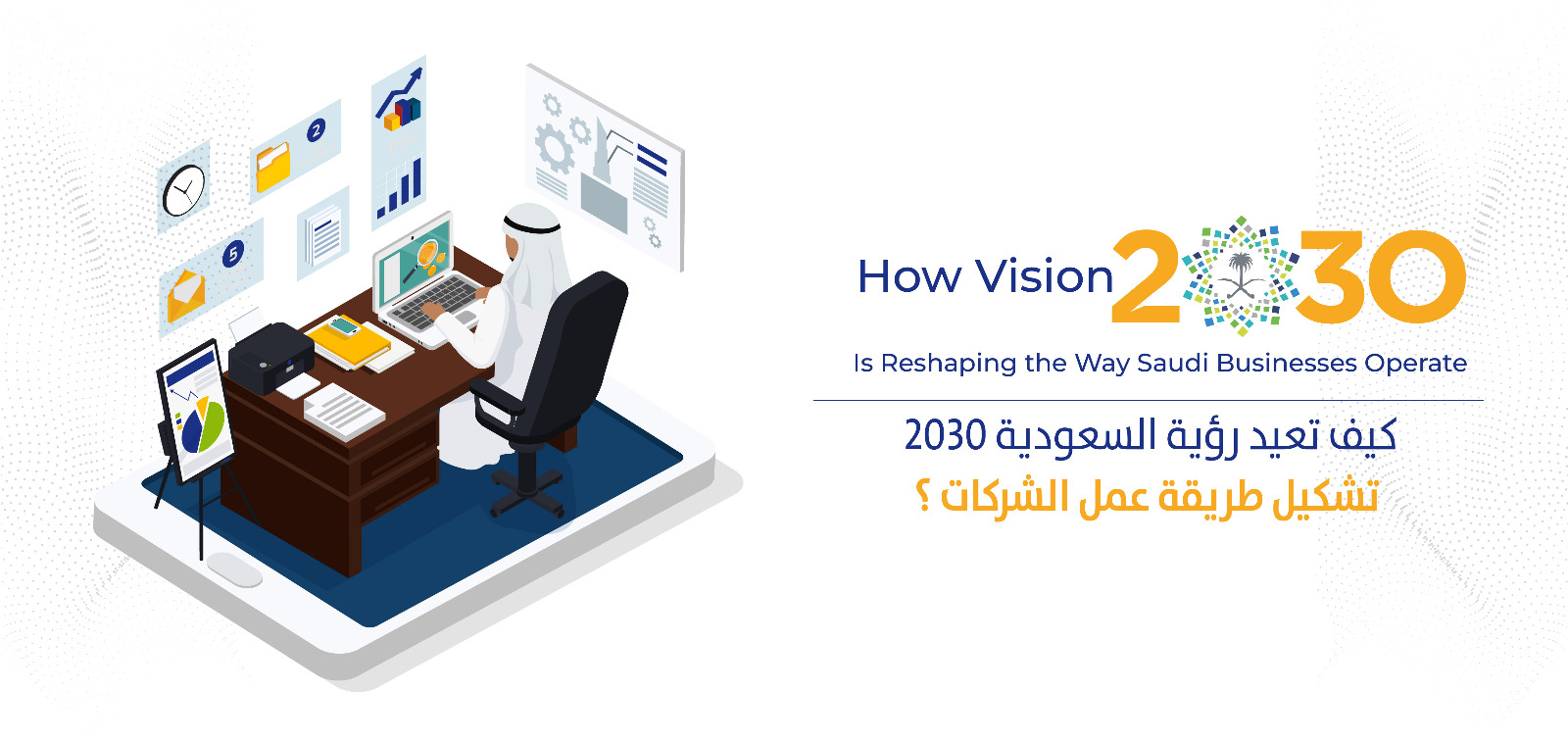
Vision 2030 is no longer a distant national ambition that sits in presentations. It has become an operating reality that shows up in how companies register, hire, contract, report, and compete. The shift is straightforward: the winners are not only the businesses with strong products, but the ones built to execute inside a faster, more measured, and more demanding environment.
One of the most practical changes is the move toward a clearer investment framework and a more standardized way of doing business. Updates around investment rules and processes signal a push toward a more competitive environment, with stronger investor protections, simpler entry mechanics, and clearer routes for dispute resolution. That matters because it reshapes competitive pressure. When the market becomes easier to access and more confidence-driven, businesses are forced to raise their own internal standards, not just their marketing.
A second shift is that risk management is no longer a back-office topic. It is now part of how serious companies operate day to day. Modern insolvency and restructuring mechanisms change how entrepreneurs and executives think about downside risk. When there are defined procedures that aim to rescue viable businesses through reorganization rather than defaulting to shutdown, the market becomes more willing to innovate—but also less tolerant of poor governance, weak documentation, or unclear financial discipline. In other words, resilience becomes operational, not rhetorical.
A third shift is the acceleration of digital operations. The expectation is speed, traceability, and measurable performance. As companies interact with digital government services and a more data-driven commercial environment, informal workarounds fade. Execution becomes visible. Delays become measurable. Quality becomes comparable. This forces a different management style: one that treats processes, response time, and documentation as revenue drivers, not administrative overhead.
The fourth shift is that Vision 2030 has changed where growth lives. New and expanded sectors—especially tourism and hospitality, logistics, technology, and services—are creating opportunities that did not exist at this scale before. A major part of that momentum is tied to how state-backed investment catalyzes private participation through projects, partnerships, and supply chain demand. At the same time, the market is signaling maturity: large projects are being reassessed through an economic viability lens, which pushes businesses to focus on real value, sustainable delivery, and credible unit economics rather than hype.
The takeaway is that Vision 2030 is reshaping business operations by shifting the market from “opportunity-led” to “system-led.” Companies that win are the ones that build operational clarity: disciplined compliance, faster execution, stronger follow-through, and measurement that connects activity to outcome. In that environment, competitiveness is not a slogan. It is a capability.