
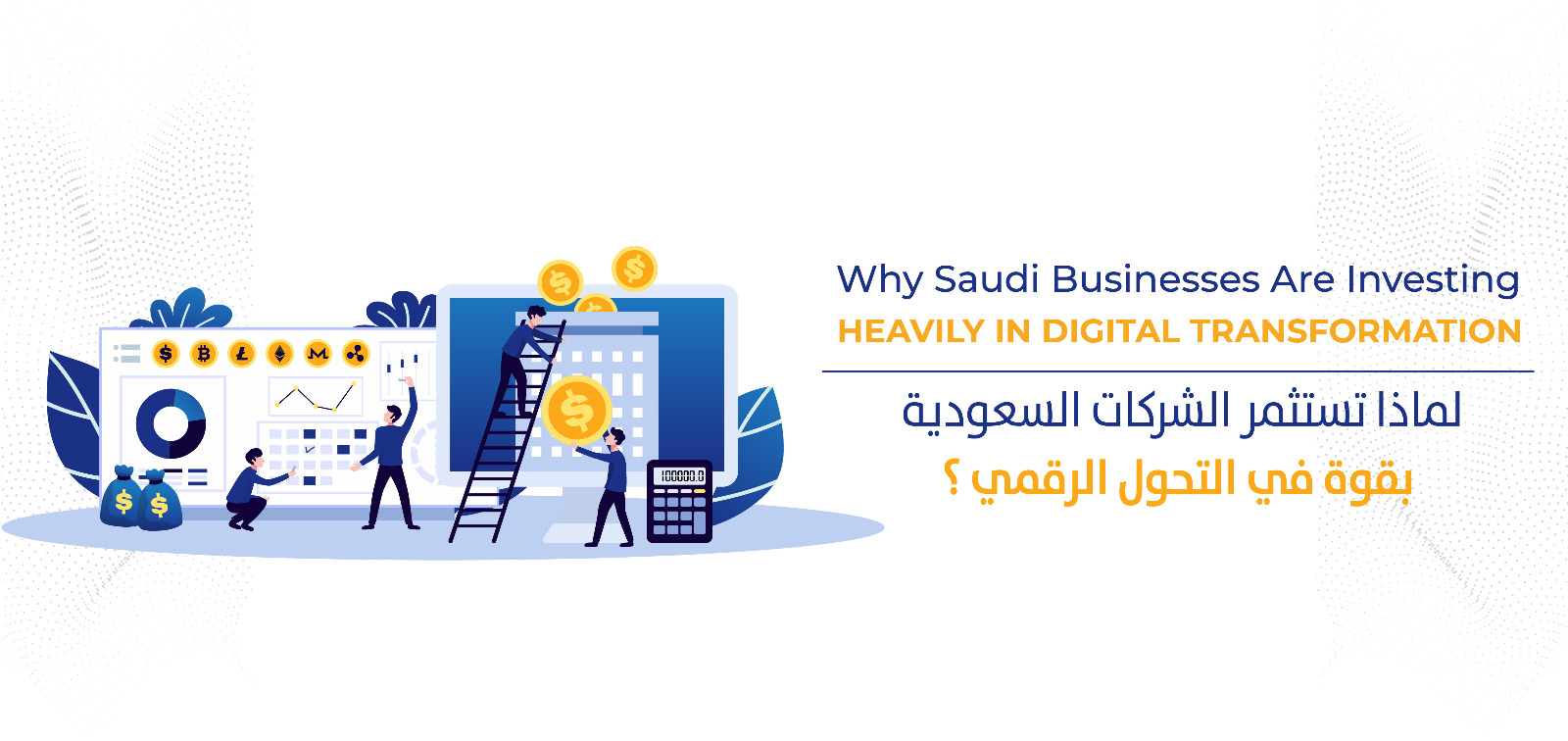
Walk into any boardroom in Riyadh or Jeddah today, and digital transformation in Saudi Arabia isn't a slide buried in the appendix anymore—it's the first item on the agenda. Executives who once treated technology spending as a cost center now treat it as the single biggest lever for growth, resilience, and market share. This isn't a passing trend. It's a structural shift backed by national policy, real capital, and measurable results.
So what's actually driving this surge, and what does it mean for business leaders trying to decide where to place their own bets?
Vision 2030 Made Digital a National Mandate
Vision 2030 didn't just encourage digitization — it built the scaffolding for it. Saudi Arabia's digital transformation has been supported by major investments in 5G networks, fiber-optic infrastructure, cloud computing, artificial intelligence, and data centers, and the results are showing up in global rankings. The Kingdom recently secured first place globally in the International Telecommunication Union's ICT Development Index, which evaluates both universal and meaningful connectivity across 159 economies. For businesses, that infrastructure isn't abstract — it means faster networks, more reliable cloud regions, and fewer excuses for staying analog.
Economic Diversification Is No Longer Optional
Saudi Arabia's digital economy reached SAR 495 billion in 2025, contributing 15% of national GDP, with government targets pushing that share higher still by 2030. This matters for every executive, not just tech leaders: as the Kingdom moves away from oil dependency, the companies that digitize their operations are the ones positioned to capture the new, non-oil growth. Sitting on legacy processes while the broader economy modernizes is a competitive risk, not a safe default.
Government Capital Is Directly Funding the Shift
This isn't just private-sector enthusiasm — the state is putting real money behind it. Saudi Arabia committed SR31.9 billion to digital services investment for 2025 alone, with the Digital Government Authority projecting direct economic impacts exceeding SR9.5 billion from that spending. Notably, contracts awarded to small and medium enterprises reached SR9.23 billion, representing 29% of total government contracts in the sector — a clear signal that this isn't only a giga-project story. Mid-sized businesses have a genuine on-ramp into the digital economy.
AI and Cloud Are Becoming Standard Infrastructure, Not Experiments
Saudi companies are no longer piloting AI in isolated corners of the business — they're building it into core operations. The National Strategy for Data and AI aims to attract USD 20 billion in AI investments and train 20,000 AI specialists by 2030, and the Public Investment Fund launched Humain in May 2025, an AI company intended to position Saudi Arabia as a global AI infrastructure provider. On the infrastructure side, the cloud computing market is forecast to grow at a compound annual rate of 11.33% between 2025 and 2033, reaching USD 38.23 billion. Global hyperscalers have taken notice: Microsoft, AWS, and Oracle have all committed to expanding cloud regions inside the Kingdom, shortening the distance between ambition and deployment for local businesses.
Customer Expectations Have Already Moved On
Saudi consumers are digital-first, and businesses that lag behind lose them quietly, one transaction at a time. The e-commerce market is projected to reach USD 24.7 billion by 2027, with user penetration expected to surpass 75%, while Vision 2030 targets 70% cashless transactions by 2030. Whether it's a retailer, a logistics firm, or a real estate agency, the expectation of instant, digital-first service is no longer a differentiator — it's the baseline.
Digital transformation in Saudi Arabia isn't being driven by hype or imported best practice. It's backed by policy, funded by government contracts, validated by global benchmarks, and demanded by a fast-moving consumer base. The businesses gaining ground today aren't necessarily the biggest — they're the ones treating technology as core strategy rather than a line item.
For executives still weighing when to invest, the more useful question may be how much longer they can afford to wait. The infrastructure, the capital, and the customer demand are already here. The businesses moving now are simply the ones choosing to meet them.