
There was a time when a five-year business plan felt like something solid you could actually count on. Companies would commit to expansion, lock in long-term supplier contracts, and launch expensive campaigns without losing much sleep over what might shift in the market next quarter. That confidence hasn't disappeared entirely, but it's taken on a different shape. Businesses today aren't necessarily more cautious by nature. They've just been taught — more than once — that assuming stability is its own kind of risk.
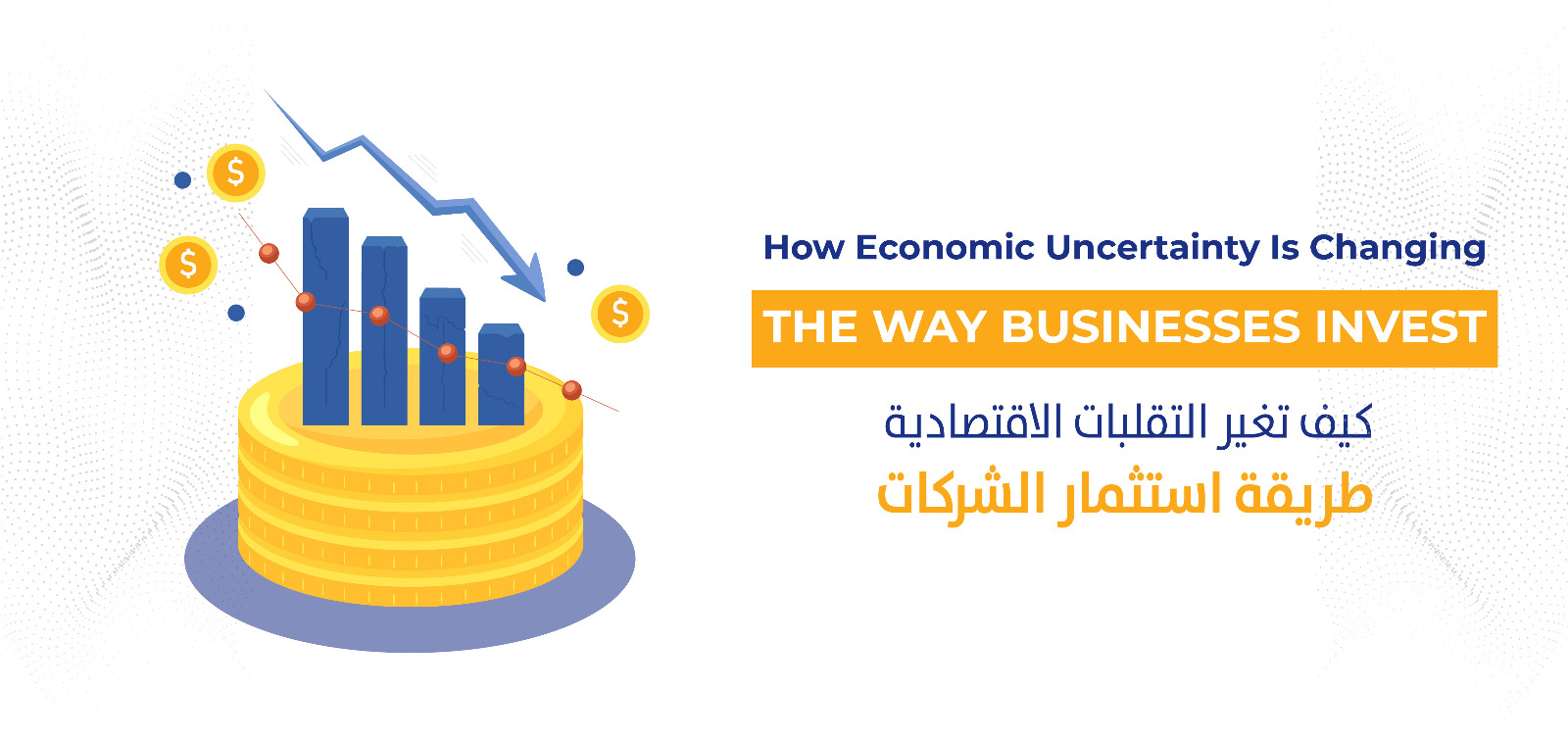
Economic uncertainty has stopped feeling like an interruption and started feeling like a permanent condition. Rising interest rates, currency swings, supply chain disruptions, inflation that refuses to behave — these aren't temporary headaches anymore. They're part of the operating environment. And they've pushed companies to ask a different question when planning where to put their money. It's no longer just "where should we invest?" The harder question now is, "How do we invest in a way that doesn't fall apart when something we didn't predict happens?"
The data behind this shift is worth looking at closely. A McKinsey report found that companies that continued investing in internal operations and technology during economic downturns came out of those periods with a meaningfully stronger competitive position than those that froze all spending. A separate study showed that businesses operating on flexible, data-driven investment models were able to reduce their losses during periods of financial pressure by over forty percent compared to peers using more rigid approaches. The lesson isn't about spending more or less. It's about spending with a clearer understanding of what you're actually buying.
That shift shows up differently across industries, but the underlying logic tends to be the same. A construction firm that used to lock in annual contracts with its main suppliers found itself exposed when material costs spiked sharply. The response wasn't to stop working with those suppliers — it was to restructure the agreements into shorter cycles with built-in review windows. It cost some predictability in the short term. But it bought the company something more valuable: the ability to adjust when the market moved, instead of absorbing the full impact of a contract it could no longer afford to honor. That's what uncertainty does to businesses that are paying attention. It trades the illusion of stability for something more functional.
What often gets missed in these conversations is that volatility doesn't hit everyone equally. Companies built entirely on the assumption that conditions will stay the same tend to struggle most. Those that treat unpredictability as a constant—rather than an emergency—often find in it a reason to reorganize priorities and sharpen what actually matters. Investing in team development, improving internal systems, or finally building out something that kept getting pushed back. None of these feel dramatic during a difficult period. But they're usually what separates the businesses that recover quickly from those that are still catching up long after conditions improve.
Economic uncertainty doesn't stop investment. It reshapes it. The companies that understand that don't wait for clear skies before making decisions. They get better at making good decisions in uncertain ones. And that capability, once it's genuinely embedded in how a business operates, tends to outlast whatever triggered it in the first place.